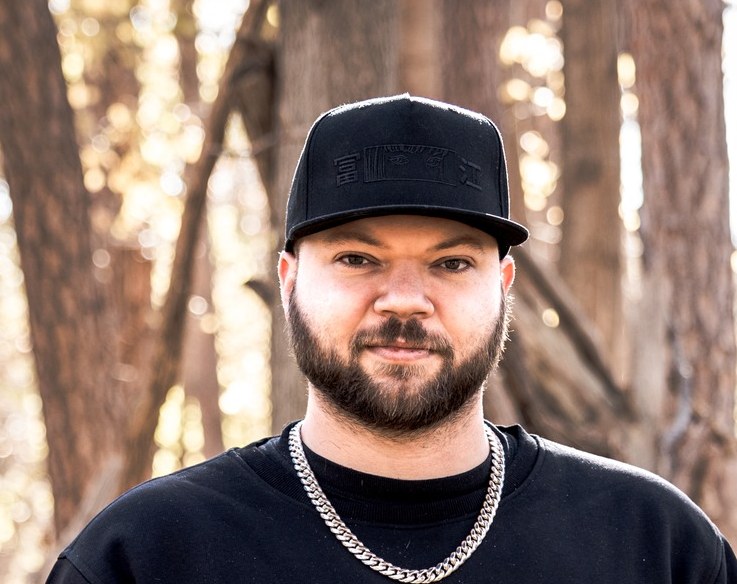
Founder
Mike Smith
I build things until I understand them, then I build the next thing. Small Mind is where that finally pointed at AI.
My grandfather was a tool-and-die maker and a cabinet maker, and he is where all of this actually starts. When he built something it was square, it was exact, and it was built to outlast him. He taught me the thing the whole company is built on before I had any words for it: don't trust the smooth answer. A joint that looks finished isn't finished. A cut that reads clean can still be wrong. You check it, because looking right and being right are two different things, and the gap between them is where everything fails.
I was a kid who took everything apart to see why it worked, then tried to build one that worked better. That never stopped. Over the years it turned into a habit of picking something hard and learning it hands-on until I understood it from the inside: engines, to the point of LS-based drift builds with no prior mechanical background. Guitar, and clawhammer banjo before it. Carpentry and cabinetmaking, my grandfather's trades. C, then Python, then the whole AI stack around them. A complete 2D platform RPG, built engine up. Different subjects, same move every time, and every one of them taught the same lesson again: the thing that looks done and the thing that is done are not the same thing.
I have also been on the internet since I was ten, which turned out to matter more than it should. I watched the whole thing unfold in real time, platform after platform, and watched what happened to the truth as it did: one source becoming forty copies, confidence detaching from evidence, the loudest version winning and the sourced version getting buried. I learned to read a thread for the one comment that actually knew something, and to distrust a claim precisely because everyone was repeating it. That was provenance instinct too. I just didn't have the word for it yet.
Then I spent my career in rooms where being wrong costs money that afternoon. I led a field sales organization of about 550 people to record numbers and pioneered the channel it ran on. I managed a plant floor for a just-in-time production company, which is the environment that hammered the lesson home hardest: in JIT, a number that can't show where it came from stops a line, and a smooth wrong signal cascades through everything downstream before anyone catches it. Then a role at one of the big automakers. Different floors, same discipline every time. A gauge that reads fine but isn't wired to anything will pass every glance and fail you exactly when it counts.
So when I turned all of that on AI, the thing that bothered me was obvious and everywhere: confidence with no receipts. Systems that assert, fluently, with no way to show why and no ability to say "I don't know." Every instinct I'd built, from my grandfather's bench, from the forums, from the plant floor, said the same thing about it. Don't trust the smooth answer. Make it show its work.
That is Small Mind. A system whose beliefs are its own, that carries where every one of them came from, that refuses when the evidence isn't there, and that only gets confident about something once it has survived a real attempt to knock it down. The first thing it produced was a hard look at my own work, published with every receipt, because a process that claims to catch dishonest measurement has to be run against yourself first.
Reach me
Small Mind LLC, Michigan. Work and receipts at github.com/Threadborne. Email smallmindllc@gmail.com.